
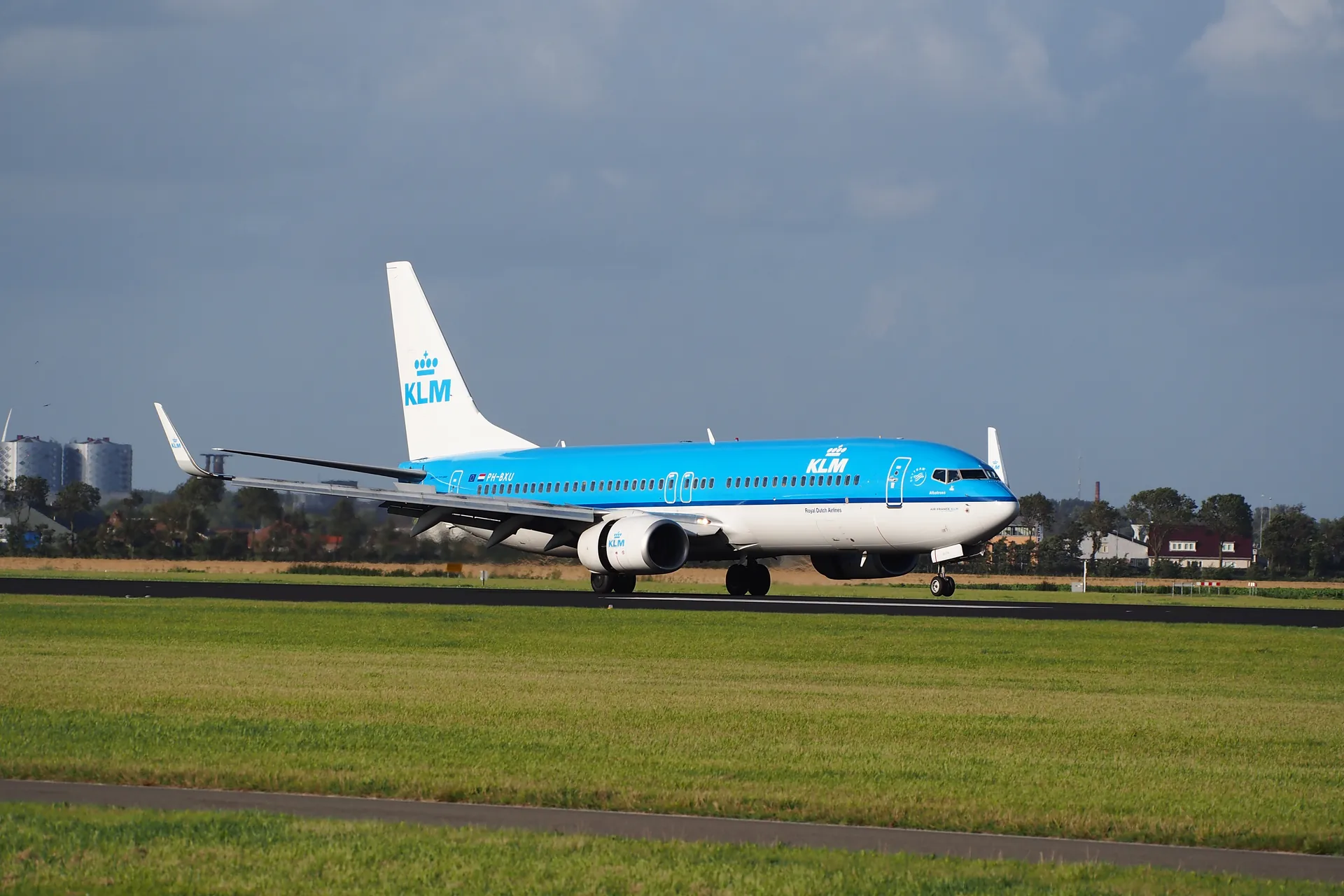
A Boeing 737-800 carries a reported list price of $106,100,000, and a 737 MAX 8 lists at $121,600,000. Almost no airline pays those numbers. The one worth remembering is the delivery count: Boeing has handed over 12,382 737s, and it still owes customers 4,869 more.
The 737 isn't one aircraft. It's four generations sharing a name, from the original 737-100 to the MAX, and the price, the fleet and the accident record look different for each. On the US register alone there are 2,887 of them, and the next-generation 737s make up 61.9% of the register.
This page runs from the list price to the running bill and then to what the NTSB and Boeing record about accidents. The rival narrow-body from Airbus has its own page, the Airbus A320 cost guide. The Boeing cost guide covers the rest of Boeing's range, and the commercial plane cost guide covers the whole airline fleet, including regional jets.
Data used: FAA registry through 2026-10-12; NTSB files through 2026-09-30. Source periods are shown with each table.
What a 737 lists at, and what that leaves out
We couldn't find a current Boeing price list. The most complete table we could verify is the one The Points Guy reproduced from Boeing in an article dated 14 July 2019, so every price in this section is a 2019 list price and says so. A newer list would replace these figures.
List prices as reported in July 2019. The gold bar is the 737-800. These aren't prices paid.



The 737-700 is the cheapest in the table at $89,100,000. The 737-800 lists at $106,100,000 and the 737-900ER at $112,600,000. The MAX line starts at $99,700,000 for the MAX 7 and climbs to $134,900,000 for the MAX 10, which is $45,800,000 above the 737-700. The MAX 8 lists $15,500,000 above the 737-800 it replaced.
- 737-700$89,100,000Next-generation 737, the lowest price in the 2019 table
- 737-800$106,100,000Next-generation 737, the model the airline cost data below reports on
- 737-900ER$112,600,000Next-generation 737
- 737 MAX 7$99,700,000737 MAX
- 737 MAX 8$121,600,000737 MAX
- 737 MAX 200$124,800,000737 MAX, listed separately in the 2019 table
- 737 MAX 9$128,900,000737 MAX
- 737 MAX 10$134,900,000737 MAX, the highest 737 price in the table
Four generations under one number
Boeing's delivery table breaks the 737 out by model, and the models fall into four generations. The original 737-100 and 737-200 delivered 1,144 between them. The classic 737-300, 737-400 and 737-500 delivered 1,988. The next generation, from the 737-600 to the 737-900ER, delivered 6,767. The MAX has delivered 2,483 so far.
Deliveries aren't aircraft in service. They include every aircraft handed over, whether it is still flying or not.
The next generation is the backbone: 55% of all 737 deliveries. The single best seller is the 737-800, at 4,989 delivered. The MAX is the future. Boeing has delivered 2,483 of them and has 4,867 MAX orders still unfilled, which is 2.0 times as many as it has delivered.
What the FAA certificate says about weight
The FAA approves every 737 model on one type certificate data sheet, and the sheet lists a certified maximum takeoff weight for each. The 737-600 is certified at 145,500 pounds and the 737-800 at 174,200. The 737-9, the heaviest on the sheet we read, is certified at 194,700, which is 49,200 pounds more than the 737-600.
The FAA sheet names the MAX 7, MAX 8 and MAX 9 as the 737-7, 737-8 and 737-9. Maximum takeoff weight is a certified limit, not a typical operating weight.
The 737-7 is the late arrival. The sheet shows it approved on 2026-08-03, years after the 737-8 and 737-9. Boeing's 2019 table already listed a price for it.
Who flies them: the FAA register
The FAA register holds 2,887 registrations for the 737, and it marks 2,816 of them valid. The other 71 carry a different status. The register covers aircraft with US registration only, so it's a slice of the world fleet, and it doesn't say whether an aircraft is flying today. For the other types of aircraft that fly in the United States, see the types of planes guide.
The registry names most models by an exact label, so every record falls in one generation.
The next generation leads with 1,787 registrations. The MAX follows at 983, the classic 737 at 101 and the original at 16. The single most common model label is the 737-8, with 632 registrations, followed by the 737-9 at 283.
- 2111990s
- 6982000s
- 9132010s
- 7892020s
251 records have a blank or invalid build year and are left out of the chart.
913 of these aircraft were built in the 2010s and 789 in the 2020s so far. Together that's 65% of the registrations with a usable build year. The oldest registered airframe dates from 1969.
By registrant type, corporations hold 95.4% of the registrations and LLCs hold 3.5%. The register lists Utah as the registration address for 16.2% of them, more than any other state. That's where the paperwork is filed, not where the aircraft fly.
Download the fleet CSV by model and build year. Free to use, please link back. It counts all registrations and valid ones by model label and build year, including blank years, and contains no personal records.
Show the registered-aircraft table
| Family | All registration statuses | Valid registrations |
|---|---|---|
| 737 Original | 16 | 16 |
| 737 Classic | 101 | 100 |
| 737 NG | 1,787 | 1,783 |
| 737 MAX | 983 | 917 |
| 737 generation unspecified | 0 | 0 |
| Total | 2,887 | 2,816 |
FAA registry through 2026-10-12. Registration is not proof of active airline service.
What an airline spends per hour in the air
Airlines in the United States report their direct operating costs to the Bureau of Transportation Statistics, aircraft type by aircraft type. For 2025 the Form 41 Schedule P-5.2 data give a cost for every airborne hour, which is the time from wheels up to wheels down.
Across 9 carriers the 737 family flew 7,302,710 airborne hours and reported $5,842 of direct operating expense for each one. The same carriers reported 854 US gallons of fuel per airborne hour, and fuel was about a third of the direct bill.
What the accident files record
The NTSB file lists 393 accidents involving the 737 between 2000 and 2025. Of those, 44 were fatal, and the fatal events reported 3,079 deaths in total. That figure covers everyone killed in those events, including people on other aircraft and on the ground.
Many NTSB records name the aircraft only as a 737, with no model. Those sit in the unspecified bar, and no generation is inferred from the year.
The NTSB names the generation for only some records. 183 of the 393 carry a bare 737 label, so the split by generation covers the rest. Next-generation records number 121, classic 51, original 26 and MAX 8. The file records no fatal MAX accident, which is a statement about US records and not about the worldwide fleet.
The first coded phase of flight shows where the records begin. 87 began en route and 82 in landing, against 36 while taxiing and 13 on takeoff. The file doesn't say what went wrong in a phase.
The six largest phases. The rest, and records with no coded phase, are in the NTSB table below.
Show the NTSB tables
| Aircraft | Accidents | Fatal accidents | Reported event deaths |
|---|---|---|---|
| 737 Original | 26 | 12 | 876 |
| 737 Classic | 51 | 9 | 400 |
| 737 NG | 121 | 5 | 278 |
| 737 MAX | 8 | 0 | 0 |
| 737 generation unspecified | 183 | 18 | 1,525 |
| One event with included aircraft in different families | 4 | 0 | 0 |
| Total | 393 | 44 | 3,079 |
2000 to 2025. US-focused NTSB records, including some foreign events where NTSB took part. These are not worldwide totals. Counts never establish rates or safety rankings. Reported deaths include other aircraft and ground deaths in a collision. Different families in one event have a separate row.
The worldwide hull-loss table
Boeing publishes a statistical summary of hull losses for the worldwide commercial jet fleet, 1959 to 2024. Boeing uses the term hull loss for the severity of damage an airplane suffers in an accident. For the 737 it counts 104 hull losses for the original generation, 68 for the classic, 23 for the next generation and 2 for the MAX.
Hull losses are cumulative counts. Boeing prints rates per million departures to compare types, and this page does not repeat them because the departures behind them are not part of our data.
The ones with fatalities run 51 for the original, 21 for the classic, 11 for the next generation and 2 for the MAX. That's the difference in scope. The NTSB file records no fatal MAX accident, while Boeing's worldwide table counts 2 MAX hull losses with fatalities. Older generations flew for decades before the newest arrived, so the counts can't be compared like for like.
Questions people ask
How much does a new Boeing 737 cost?
The latest full Boeing list we could verify was reported in July 2019. It put a 737-800 at $106,100,000 and a 737 MAX 8 at $121,600,000. Those are list prices. Airlines negotiate, and the prices they pay are not public.
How much does a Boeing 737 MAX cost?
The 2019 list reported $99,700,000 for the MAX 7, $121,600,000 for the MAX 8, $128,900,000 for the MAX 9 and $134,900,000 for the MAX 10. These are list prices, not what an airline pays.
How much does it cost to fly a Boeing 737 for an hour?
US airlines reported $5,842 of direct operating expense per airborne hour for the 737 family in 2025. That's an average, and it adds no lease rates or overhead.
How many Boeing 737s are there?
Boeing has delivered 12,382 of them, and has 4,869 unfilled orders. The FAA register holds 2,887, which covers US-registered aircraft only.
What is the difference between the 737-800 and the 737 MAX 8?
The MAX 8 is the newer generation. In the 2019 table the MAX 8 lists at $121,600,000 against $106,100,000 for the 737-800, and the FAA lists a higher maximum takeoff weight for it.
Which 737 is the most common?
Worldwide, the 737-800 has the most deliveries, at 4,989. On the US register the most common label is the 737-8, with 632 registrations.
Keep PilotPassion in your Google results
Add us as a preferred source and we are more likely to appear in your Top Stories.
Sources and how the numbers were made
- Federal Aviation Administration. Releasable Aircraft Database. Retrieved 2026-10-13. The registry supplies fleet counts by model, build year, registrant type and state.
- Federal Aviation Administration. Aircraft Registration Database Description. Retrieved 2026-10-13. This document explains registration status and registrant-type codes.
- Federal Aviation Administration. Type Certificate Data Sheet A16WE. Retrieved 2026-10-14. The FAA sheet supplies certified approval dates, engines, thrust and weights for the covered models.
- National Transportation Safety Board. Aviation accident data: avall. Retrieved 2026-10-13. The records from 2008 onward supply the NTSB counts.
- National Transportation Safety Board. Historical aviation accident data: Pre2008. Retrieved 2026-10-13. The earlier records supply the years 2000 to 2007.
- National Transportation Safety Board. Aviation accident database data dictionary. Retrieved 2026-10-13. The data dictionary defines the injury and event codes.
- National Transportation Safety Board. Aviation accident data download directory. Retrieved 2026-10-13. The download directory lists the published files and their dates.
- National Transportation Safety Board. Aviation accident database release notes. Retrieved 2026-10-13. The release notes describe what each file contains.
- National Transportation Safety Board. Aviation accident database search help. Retrieved 2026-10-13. The search help explains how the NTSB selects and labels records.
- National Transportation Safety Board. Aviation accident database scope. Retrieved 2026-10-13. The scope note states that the database is US-focused and which events it covers.
- Federal Aviation Administration. General Aviation and Part 135 Activity Survey. Retrieved 2026-10-13. The survey is cited to explain why no accident rates are given.
- The Points Guy. Boeing list price table reproduced with article dated 2019-07-14. Retrieved 2026-10-14. The table supplies the 2019 Boeing list prices.
- Boeing / Tableau Public. Commercial orders and deliveries, September 2026. Retrieved 2026-10-14. Boeing's orders and deliveries table supplies deliveries and unfilled orders.
- Boeing / Tableau Public. ASC 606 backlog, September 2026. Retrieved 2026-10-14. The ASC 606 table supplies the accounting backlog.
- Boeing / Tableau Public. Orders and deliveries workbook, data through 09/30/2026. Retrieved 2026-10-14. The workbook records the as-of date of the orders and deliveries data.
- Bureau of Transportation Statistics. Form 41 Schedule P-5.2 annual 2025. Retrieved 2026-10-14. Schedule P-5.2 supplies direct operating expense, fuel and airborne hours by aircraft type.
- Bureau of Transportation Statistics. Aircraft type lookup. Retrieved 2026-10-14. The lookup matches BTS aircraft codes to type descriptions.
- Bureau of Transportation Statistics. P-5.2 field descriptions. Retrieved 2026-10-14. The field descriptions define the P-5.2 columns.
- The Boeing Company. The Boeing Company. Retrieved 2026-10-15. Boeing's statistical summary supplies the worldwide hull-loss counts.